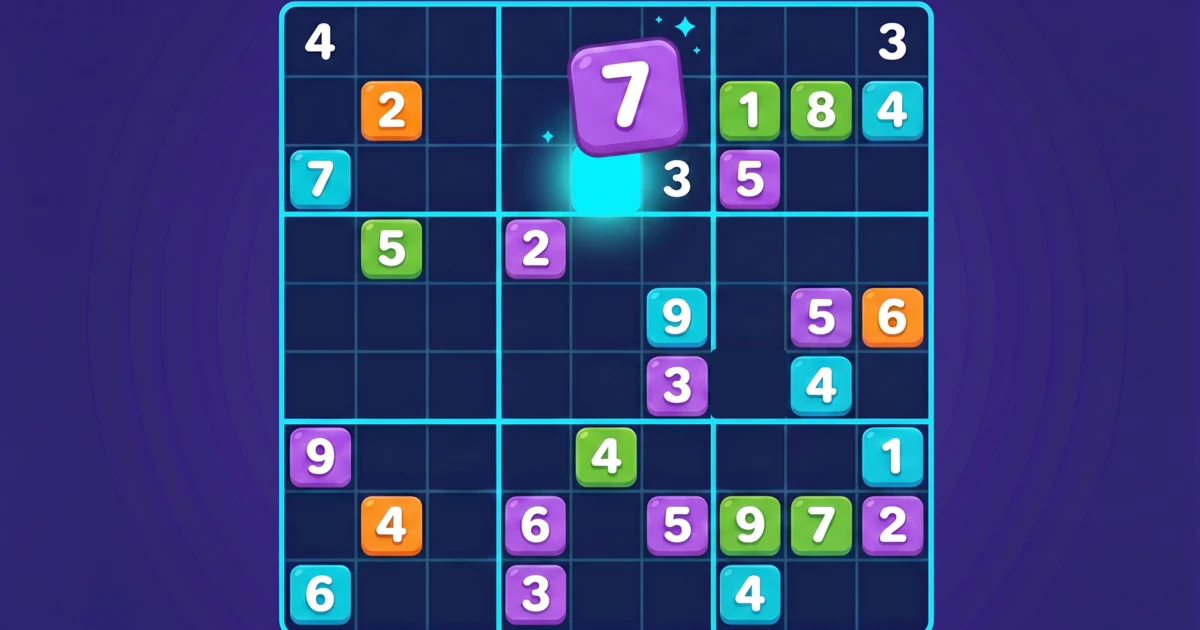
Killer Sudoku

Killer Sudoku

오늘의 퍼즐

Killer Sudoku - Cage Sums Instead of Starting Numbers, Solo or With Friends

3.0

평점

0

0

Killer Sudoku - Cage Sums Instead of Starting Numbers, Solo or With Friends

export function MiniCell({value, sum, sumTone}) { // Mirrors how the real board draws a cell: an opaque white square with a dark digit, and the // cage total tucked into the top-left corner just inside the dashed cage outline, in the same // three colors the board uses (see client/src/games/sudoku/SudokuGrid.tsx). const toneClass = sumTone === 'correct' ? 'text-green-600' : sumTone === 'over' ? 'text-red-600' : 'text-gray-500'; return (

{sum === undefined ? null : ( <span className={'absolute left-1 top-0.5 text-[11px] font-bold leading-none ' + toneClass}>{sum} )} {value ?? ''}
); }

export function combinationsOf(size, total) { // Every set of size different digits from 1-9 that adds up to total. const results = []; const walk = (start, left, remaining, picked) => { if (left === 0) { if (remaining === 0) { results.push(picked); } return; } for (let digit = start; digit <= 9; digit++) { walk(digit + 1, left - 1, remaining - digit, [...picked, digit]); } }; walk(1, size, total, []); return results; }

export function CageDemo() { const TARGETS = [ {total: 7, blurb: 'A low total leaves you almost no choice, so a cage like this is where you start solving.'}, {total: 15, blurb: 'The most flexible total there is. On its own it tells you almost nothing, so you need the row, column, and box to narrow it down.'}, {total: 24, blurb: 'Only one set again, at the top end. High and low totals are always the easiest cages to crack.'}, ]; const [target, setTarget] = useState(7); const [cells, setCells] = useState([null, null, null]); const filled = cells.filter(cell => cell !== null); const total = filled.reduce((sum, cell) => sum + cell, 0); const isFull = filled.length === 3; const tone = total > target || (isFull && total !== target) ? 'over' : isFull ? 'correct' : undefined; const combos = combinationsOf(3, target);

const place = digit => { if (cells.includes(digit)) { setCells(cells.map(cell => (cell === digit ? null : cell))); return; } const next = cells.indexOf(null); if (next >= 0) { setCells(cells.map((cell, i) => (i === next ? digit : cell))); } };

const pickTarget = nextTarget => { setTarget(nextTarget); setCells([null, null, null]); };

return (

Fill a Cage

This is one cage of three cells. Tap digits to drop them in, and tap a digit again to take it back out. The number in the corner is the total the three cells have to reach, and it turns green when you get there.

{TARGETS.map(option => ( <button key={option.total} type="button" onClick={() => pickTarget(option.total)} className={ 'rounded-lg px-3 py-1 text-sm font-bold text-white transition-none ' + (target === option.total ? 'bg-purple-500' : 'bg-white/10 hover:bg-white/20') } > Total {option.total} ))}
{cells.map((cell, i) => ( ))}
{[1, 2, 3, 4, 5, 6, 7, 8, 9].map(digit => ( <button key={digit} type="button" onClick={() => place(digit)} className={ 'h-9 w-9 rounded-lg text-lg font-bold active:scale-95 ' + (cells.includes(digit) ? 'bg-purple-500 text-white' : 'bg-white/10 text-white/80 hover:bg-white/20') } > {digit} ))}

{isFull && total === target ? 'That works. Every digit is different and they add up to the total.' : total > target ? 'Too high. Take a digit back out and try a smaller one.' : TARGETS.find(option => option.total === target).blurb}

{combos.length === 1 ? 'Only one set of three digits works: ' : ${combos.length} sets of three digits work: } {combos.map(combo => combo.join('+')).join(', ')}

); }

export function FortyFiveDemo() { // A single 3x3 box. Three cages sit entirely inside it and the ninth cell belongs to a cage // that carries on into the next box, which is the shape you look for when you use the 45 rule. const CELLS = [ {value: 1, cage: 'a', sum: 3}, {value: 2, cage: 'a'}, {value: 3, cage: 'b', sum: 14}, {value: 4, cage: 'c', sum: 19}, {value: 5, cage: 'b'}, {value: 6, cage: 'b'}, {value: 7, cage: 'c'}, {value: 8, cage: 'c'}, {value: 9, cage: 'outside'}, ]; const [isRevealed, setIsRevealed] = useState(false); const TONES = {a: 'bg-amber-400', b: 'bg-blue-400', c: 'bg-emerald-400', outside: 'bg-white/40'}; return (

{CELLS.map((cell, i) => (
<span className={'absolute bottom-1 left-1/2 h-1.5 w-7 -translate-x-1/2 rounded-full ' + TONES[cell.cage]} />
))}

The 45 rule

Three cages sit entirely inside this box, totalling 3, 14, and 19. That accounts for eight of the nine cells. The ninth belongs to a cage that carries on into the next box, so its total is no help here. The box has to hold 1 to 9 once each, so it adds up to 45, and the missing cell is whatever is left.

45 - 3 - 14 - 19 = {isRevealed ? '9' : '?'}

<button type="button" onClick={() => setIsRevealed(!isRevealed)} className="w-max rounded-lg bg-white/10 px-3 py-1 text-sm font-bold text-white hover:bg-white/20 active:scale-95" > {isRevealed ? 'Hide the answer' : 'Show the answer'}
); }

Killer Sudoku

Killer sudoku is a free online sudoku variant where the grid gives you sums instead of starting numbers. The board is carved into cages, small groups of neighbouring cells drawn with a dotted outline, and each cage prints the total its digits must reach. No digit repeats inside a cage, and the rest is normal sudoku: every row, every column, and every 3x3 box holds 1 to 9 once each. You can play it on this page right now in your browser, alone or with friends on a shared board, at four difficulty levels, with no download and no signup.

Because the cages carry the information, killer grids start almost bare. An Easy puzzle here opens with four given digits and Expert usually opens with none at all, so your first move comes from arithmetic rather than from scanning for a number that is already on the board.

Killer Sudoku Rules

There are two rules on top of ordinary sudoku, and they are both about cages. A cage's digits have to add up to the small number in its top-left corner, and a digit can only appear once inside a cage. The second rule matters more than it looks, because it is what makes a total useful. A three-cell cage adding to 7 could be 1+2+4 or 1+3+3 if repeats were allowed, but they are not, so 1+2+4 is the only option and all three cells are settled before you have placed anything else.

Extreme totals are the way in. Low totals have to use the small digits and high totals have to use the large ones, so a two-cell cage adding to 3 is 1 and 2, a two-cell cage adding to 17 is 8 and 9, and a three-cell cage adding to 24 is 7, 8, and 9. Middling totals like 15 are the vaguest and are usually the last cages you fill.

The other technique worth learning early is the 45 rule. Every row, column, and 3x3 box contains each digit once, so each one adds up to 45. Find a row, column, or box where every cage sits fully inside it except for a cell or two, add up the cage totals, and the difference from 45 is what is left over.

One last detail: a cage can be a single cell. When it is, its total is simply the digit that goes there, which is the same thing as a given number in classic sudoku. Easy puzzles here include eight of those and Expert includes three, and that gap is a large part of why the difficulties feel so different.

Play Killer Sudoku Online Free

The board at the top of this page is already set to killer, so pressing play is the fastest way in. From anywhere else on Foony, open Sudoku, choose Create Room, and pick the Killer Sudoku card from the presets, or flip the Variant setting from Classic to Killer on any room you are setting up.

Four difficulty levels change both the cage shapes and how much of the grid you get for free:

Easy and Medium

Cages hold up to four cells, and plenty of them hold just one. Easy starts with four given digits and Medium with one, on top of the single-cell cages.

Hard and Expert

Cages stretch to five cells and single-cell cages get rare. Both normally open with no given digits at all, so the sums are all you have.

Every puzzle has exactly one solution, and it is checked before you ever see it. The generator builds cages from a finished grid and then solves the result under killer rules to confirm the answer is forced, so you never have to guess.

The rest of the room settings work the same as classic sudoku. Mistake tolerance is Casual (unlimited), Normal (three mistakes), or Perfectionist (one mistake and the puzzle ends). The host can put a clock on it, anywhere from 5 to 60 minutes, or leave it off. Killer solves are given more time for the same reward than classic ones, because they take longer, and they are scored on their own scale so a long solve is not penalised.

While you play, the board does the arithmetic with you. Each cage total sits in the corner of its first cell, turns green once the cage is full and correct, and turns red the moment your digits pass the total, so a slip shows up on the spot instead of forty cells later. Selecting a cell tints the rest of its cage, which is the fastest way to see the shape of a cage that wraps around a corner. Pencil marks work exactly as they do in classic sudoku.

Multiplayer Killer Sudoku

Killer is the sudoku variant that benefits most from a second pair of eyes, and every Foony room supports one. Turn Co-op on when you create the room and everyone joins a single team sharing one grid, with live cursors, so you can split the board by region, have someone work the cage arithmetic while another person scans rows, or just talk through a corner that will not open. It is also the easiest way to teach the variant to someone, since they can watch a cage get cracked instead of reading about it.

Leave Co-op off and everyone gets the same puzzle on their own grid, with first to finish legally taking the win. That covers a 1v1 race, a friends-only match, and a tournament room, which holds up to 1,000 players on one seed. Share the room link and people join from any modern browser on desktop, tablet, or phone. No account is needed to play, only to keep levels, ranks, and unlocks across devices.

Killer Sudoku Tips and Cage Combinations

Sweep for extreme cages first. Before you place anything, look for two-cell cages totalling 3, 4, 16, or 17, and three-cell cages totalling 6, 7, 23, or 24. Each of those has exactly one possible set of digits, and one settled cage usually gives you a second through the ordinary row and column rules.

Use the 45 rule on the edges of the grid, where boxes are most likely to have a single cell poking out of a cage. It also works across several rows or columns at once. Two full rows add up to 90, three add up to 135, so a cage that spills a single cell out of a three-row band gives that cell away.

Watch for cages inside one row, column, or box. Their digits cannot repeat anywhere in that unit either, so a two-cell cage totalling 16 inside a single box removes 7 and 9 from every other cell in that box, which is often more useful than knowing where they go.

Play Hard and Expert in Casual mode until the arithmetic is second nature. A wrong digit in killer usually comes from a miscount rather than a broken deduction, and there is little to learn from a puzzle that ends on one. Switch to Perfectionist once you stop miscounting, and chase Flawless Victory then.

Sudoku Leaderboards, Achievements, and Boards

Killer solves count towards everything classic solves do. Wins feed the sudoku leaderboards, which filter by day, week, month, year, or all-time.

There are eight sudoku achievements and killer is a fair route to most of them. Flawless Victory asks for zero mistakes on any puzzle, Zen Master for a solve with no hints, and Hard as Nails and Puzzle Master for Hard and Expert solves with three mistakes or fewer, all of which count on a killer board. Quick Solve is the one to leave for classic, since it wants an Easy puzzle finished inside five minutes.

Playing also drops sudoku boards and number styles. There are 12 boards, including Wooden, Zen Garden, Blueprint, and Neon, and 12 number styles such as Ink Brush, Fountain Pen, and Gilded, with the Calligraphy style handed out at level 50. They change how the grid looks and nothing else. The dotted cage outlines and their totals draw over whichever board you have equipped.

Classic Sudoku and Other Puzzles

If the cage arithmetic is new to you, the sudoku page covers the base rules the variant is built on, along with the same co-op rooms, races, and difficulty levels. Working through a Hard classic puzzle first makes killer much easier to pick up, because once the cages have given you a dozen digits the rest of the solve is ordinary sudoku.

스도쿠 온라인: 자주 묻는 질문

친구와 같은 보드에서 협동 스도쿠를 할 수 있나요?
네, 가능해요. Foony 스도쿠에서 방을 만들 때 협동(또는 "코옵", 같은 거예요)을 켜면, 로비에 있는 모두가 한 팀이 되어 하나의 9x9 보드를 공유하고, 실시간으로 서로의 커서까지 보면서 함께 풀어요. 구역을 나눠서 분담해도 되고, 확정 전에 서로의 배치를 다시 확인해 줘도 되고, 어려움(Hard)이나 전문가(Expert) 퍼즐의 까다로운 추론을 채팅으로 함께 풀어가도 돼요. 어깨너머로 들여다보지 않고도 초보자에게 가르쳐 주기에 가장 좋은 방법이에요.
Foony는 어떤 스도쿠 난이도를 제공하나요?
Foony 스도쿠에는 방마다 한 번 고르는 네 가지 난이도가 있어요. 쉬움에서는 모두가 처음 배우는 두 가지 풀이만 필요해요. 한 칸에 들어갈 수 있는 숫자가 하나만 남는 경우와, 한 숫자가 들어갈 수 있는 칸이 하나만 남는 경우예요. 보통에서는 같은 두 숫자 후보를 공유해 다른 숫자를 모두 밀어내는 두 칸짜리 페어와, 한 숫자의 후보가 두 행에서 똑같은 두 열에만 묶이는 X-윙이 추가돼요. 어려움에서는 트리플과 더 큰 후보 묶음이 등장하고, 이때부터 후보 숫자를 메모한 보람이 커져요. 전문가에서는 숫자 하나의 가능성을 여러 칸에 걸쳐 따라가 멀리 떨어진 칸에서 후보를 지우는 체인이 추가돼요. 난이도가 높을수록 처음 주어지는 숫자가 적고, 완료했을 때 더 많은 XP와 아이템 드롭을 받아요.
Foony 스도쿠는 무료인가요?
네. Foony 스도쿠은 브라우저에서 완전히 무료로 즐길 수 있어요. 퍼즐, 멀티플레이어 룸, 토너먼트, 업적 어디에도 유료 장벽이 없어요. 상점에서는 선택 사항인 꾸미기용 보드와 숫자 스타일을 판매하지만, 그 안의 어떤 것도 퍼즐 생성기나 규칙을 바꾸지 않아요.
캐주얼, 노멀, 퍼펙셔니스트 모드는 어떻게 다른가요?
Foony 스도쿠의 세 가지 모드는 실수 허용 범위를 다르게 적용해요. 캐주얼은 실수를 무제한으로 허용해서, 퍼즐이 실패로 끝나는 일이 없기 때문에 학습에 안성맞춤이에요. 노멀은 게임이 끝나기 전까지 최대 3번의 실수를 허용해요. 퍼펙셔니스트는 단 한 번의 잘못된 배치만으로도 게임이 끝나기 때문에, 무결승(Flawless Victory) 업적을 노리거나 자신의 한계 실력을 끌어올리고 싶을 때 알맞은 설정이에요. 더 위험한 모드일수록 더 많은 XP와 더 많은 아이템 드롭을 보상으로 받아요.
스도쿠는 어떻게 하나요?
스도쿠는 9x9 격자를 9개의 3x3 박스로 나눈 논리 퍼즐이에요. 격자에는 1부터 9까지의 숫자가 일부 미리 채워진 상태로 시작해요. 목표는 모든 빈 칸을 채워서 각 행, 각 열, 각 3x3 박스에 1부터 9까지의 숫자가 정확히 한 번씩 들어가게 하는 거예요. 산수는 전혀 필요 없고, 오직 논리적 추론만 사용해요. Foony 스도쿠은 합법적인 배치를 강조해 주고, 충돌은 빨간색으로 보여주며, 아직 확정하지 않은 칸의 후보 숫자를 기록할 수 있는 연필 메모(펜슬 마크) 기능도 함께 제공해요.
회원가입 없이 스도쿠를 할 수 있나요?
네. Foony 스도쿠을 열면 바로 보드 앞에 앉을 수 있고, 계정이 필요 없어요. 기기 간 레벨 동기화, 영구적인 리더보드 순위, 상점 잠금 해제가 필요할 때만 가입하시면 돼요. 전체 규칙, 4가지 난이도, 3가지 게임 모드, 그리고 멀티플레이어 룸 모두 계정 없이 이용할 수 있어요.
친구들과 온라인으로 스도쿠는 어떻게 하나요?
Foony 스도쿠을 열고 "친구와 플레이"를 클릭해 비공개 방을 만든 다음, 초대 링크를 공유하세요. 친구들은 데스크톱, 태블릿, 휴대폰 어떤 최신 브라우저에서든 참여할 수 있고, 계정을 만들 필요도, 설치할 것도 전혀 없어요. 난이도를 고르고, 모드(캐주얼 / 노멀 / 퍼펙셔니스트)를 고르고, 협동 모드인지 레이스 모드인지 정하면 곧바로 보드 앞에 앉게 돼요.
Foony 스도쿠에는 리더보드, 업적, 꾸미기 아이템이 있나요?
네, 세 가지 모두 있어요. Foony 스도쿠에서 거둔 승리는 공개 리더보드에 반영되고, 일간, 주간, 월간, 연간, 전체 기간으로 나눠 볼 수 있어요. 게임 내 업적은 12개예요. 어떤 퍼즐이든 실수 없이 푸는 완벽한 승리, 쉬움 퍼즐을 5분 안에 푸는 번개 풀이, 어려움 또는 전문가 퍼즐을 실수 3회 이하로 푸는 강철 같은 난도와 퍼즐 마스터, 힌트 없이 푸는 젠 마스터가 있어요. 오늘의 퍼즐 관련 업적도 네 개이며, 전문가 오늘의 퍼즐 100개를 풀면 얻는 오늘의 최고 난도까지 준비되어 있어요. 꾸미기용 보드는 나무, 젠 가든, 청사진, 스테인드글라스, 잉어 연못, 고대 두루마리 등 13종이고, 숫자 스타일도 잉크 펜, 만년필, 먹붓, 금박, 서예, 보석 등 13종이에요. 상점에서 사거나, 드롭 또는 오늘의 퍼즐로 얻을 수 있어요. 스킨은 오직 외형만 바꾸며 퍼즐 생성에는 절대 영향을 주지 않아요.
친구들과 레이스를 하거나, 2인 스도쿠를 하거나, 스도쿠 토너먼트를 열 수 있나요?
네, 세 가지 모두 한 가지 모드로 가능해요. Foony 스도쿠에서 방을 만들 때 협동을 끄면, 로비의 모든 플레이어가 같은 시작 퍼즐을 각자의 보드에서 풀게 돼요. 가장 먼저 규칙대로 보드를 다 채운 사람이 승리해요. 이걸로 1대1 / 2인 스도쿠, 친구들끼리만 하는 레이스, 한 시드로 최대 1,000명까지 참여하는 경쟁 스도쿠 토너먼트를 모두 진행할 수 있어요. 퍼펙셔니스트 모드와 결합하면 한 번만 잘못 둬도 탈락하는 살벌한 스프린트가 되고, 캐주얼과 결합하면 "누가 먼저 끝내나" 식의 여유로운 한 판이 돼요.
스도쿠 퍼즐에 시간 제한을 둘 수 있나요?
네. Foony 스도쿠의 호스트는 퍼즐당 빠듯한 5분부터 최대 60분까지 자유롭게 시간 제한을 설정할 수 있고, 시계를 아예 꺼서 시간 제약 없는 여유로운 세션으로 진행할 수도 있어요. 시간 제한은 난이도나 실수 허용 설정과 독립적이어서, 전문가(Expert) 퍼즐을 캐주얼 실수 허용 + 60분 제한으로 풀거나, 쉬움(Easy) 퍼즐을 퍼펙셔니스트 + 10분 스프린트로 돌릴 수도 있어요.
학교나 회사에서 차단 없이 Foony 스도쿠를 할 수 있나요?
Foony 스도쿠은 전적으로 브라우저에서 실행되기 때문에, 별도 게임 설치를 막아 두는 대부분의 학교·사무실 네트워크에서도 잘 작동해요. 실행할 파일도, 앱스토어 계정도 필요 없고, 페이지 자체는 foony.com에서 HTTPS로 불러와요. 네트워크에서 foony.com 자체를 차단해 두었다면 IT 담당자에게 허용해 달라고 부탁해 보세요. 저희는 일반적인 "차단 게임" 목록에 올라 있지 않아요.
Foony 스도쿠 퍼즐은 해답이 단 하나라고 보장되나요?
네. Foony 스도쿠에서 생성되는 모든 퍼즐은 추측 없이 순수한 논리만으로 풀 수 있는 정답이 정확히 하나뿐이에요. 추측해야 할 것 같다면 어딘가의 조건을 놓쳤거나 더 고급 기법이 필요한 거예요. 어려움은 두세 행에 동시에 걸친 패턴을 많이 쓰고, 전문가는 칸에서 칸으로 따라가는 체인을 활용해요. 정답이 여러 개인 퍼즐은 정의상 잘못된 스도쿠이고, 저희 생성기는 그런 퍼즐을 절대 만들지 않아요. 실제로 제공되는 모든 퍼즐은 기준 채점기인 스도쿠 익스플레이너로 다시 확인하며, 판정이 저희가 매긴 난이도와 다르면 폐기해요.
8 Ball Pool online multiplayer billiards icon