
















Sudoku Online - Live Multiplayer Sudoku: Co-op, 1v1 Races, and Tournaments
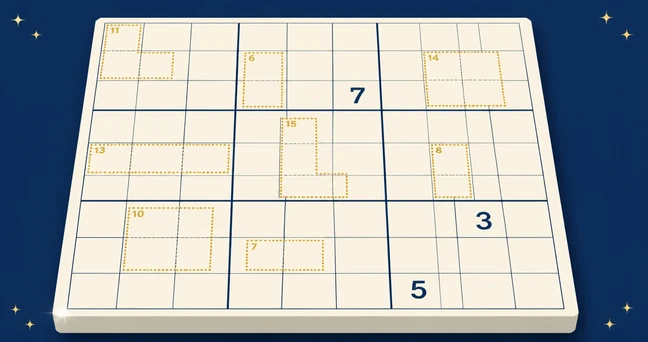 Killer Sudoku
3.0
Rating
0
0
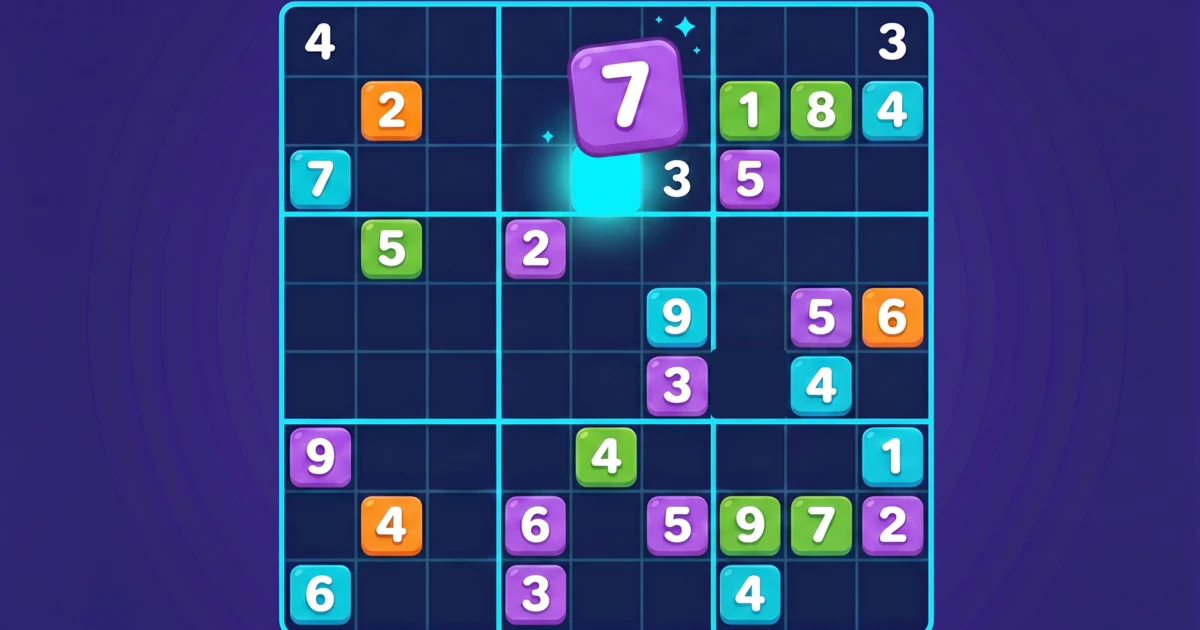
Free Multiplayer Sudoku Online with Friends in Your Browser
Foony Sudoku is a free live multiplayer sudoku game with real-time co-op (everyone in the room shares a single 9x9 board with live cursors), competitive race / tournament rooms for anything from a 2 player 1v1 up to a 1,000-player sudoku tournament on the same seed, and four difficulty levels from Easy to Expert. Guests can join, race, and finish a puzzle without an account or install, and all four difficulties plus all three mistake-tolerance modes are unlocked from your first puzzle.
Most sudoku sites are pure single-player. Foony is built around the live multiplayer angle that the dominant sudoku sites do not offer. The same generator that powers solo runs powers shared-board coop, head-to-head 1v1 races, and competitive sudoku tournaments, all from the same browser tab. The puzzle highlights legal placements, surfaces conflicts in red, and ships pencil marks for tracking candidate numbers in cells you have not committed yet. Three mistake-tolerance modes (Casual / Normal / Perfectionist) cover the full range from "I am learning the rules" to "I want a single misclick to end the run".
Co-op, 1v1 Race, and Sudoku Tournaments: Three Ways to Play Multiplayer
The co-op toggle decides whether your room is collaborative or competitive. Co-op mode (or "coop" without the hyphen, same thing) puts everyone in the lobby on a single shared 9x9 board with live cursors. You can divide the grid into sections, double-check each other's placements before they lock in, or just chat through the trickier deductions on Hard and Expert puzzles. It is the easiest way to teach a beginner without leaning over their shoulder, and it turns Expert puzzles (which routinely take 30+ minutes solo) into a 10-minute group exercise where two pairs of eyes catch what one would miss.
Race mode is the opposite. Co-op off, and every player in the lobby gets the same starting board on their own grid; the first solver to fill the board legally wins. The same toggle covers the whole competitive spectrum: a 2 player sudoku duel between two friends, a small-group race in a private room, or a full-blown sudoku tournament with up to 1,000 entrants on a single seed for office events and community challenges. Pair race mode with Perfectionist mistake tolerance for a brutal 1v1 sprint where one wrong placement eliminates you, or with Casual mode for a relaxed who-can-finish-first round.
Leaderboards, Achievements, and Cosmetic Boards
Wins on Foony Sudoku feed the public Sudoku leaderboards, filterable by day, week, month, year, or all-time. The leaderboard tracks puzzle completions, so a marathon Sunday session pushes you up the daily ranks fast.
There are 8 Sudoku achievements tracking the milestones worth chasing. Some are skill-tier markers: Quick Solve (an Easy puzzle in under 5 minutes), Flawless Victory (any puzzle with zero mistakes), Hard as Nails (a Hard puzzle with three or fewer mistakes), Puzzle Master (the same on Expert). And one is a deliberate philosophy marker: Zen Master (a puzzle solved with no hints).
Spend coins from drops on cosmetic Sudoku boards and number styles. 12 themed boards range from clean defaults (Classic, Paper) to atmospheric rare drops (Zen Garden Board, Ancient Scroll Board, Galaxy Board, Blueprint, Neon, Digital). 12 number styles range from straightforward Pencil Marks and Ink Pen up to the level-50 Calligraphy Set, the rare Ink Brush, the Gilded Numbers, and the Gemstone Numbers (each digit is a carved gem). Skins are purely visual; equipping the Ink Brush set never changes the puzzle generator.
Drop tables also cross over into the rest of Foony's catalog. Playing sudoku can earn you the Tribal Plant Brush for Paint Job, the Fox Piece for Checkers, or the Modern Set for Chess. Each cross-game drop has a level requirement on the destination game, so you cannot farm a chess set you cannot equip, but the drops sit naturally inside the rare and mega-rare tables alongside the sudoku exclusives.
How to Play Sudoku
Sudoku is a logic puzzle on a 9x9 grid divided into nine 3x3 boxes. The grid starts partially filled with numbers from 1 to 9. Your goal is to fill every empty cell so that each row, each column, and each 3x3 box contains every digit 1 through 9 exactly once. Despite the digits, no arithmetic is involved. Sudoku is pure logical deduction.
The Grid
The board has 81 cells arranged as 9 rows and 9 columns. Heavy lines split it into nine 3x3 boxes. The starting "givens" (the pre-filled numbers) are fixed and cannot be changed. Every empty cell on Foony shows a faint highlight when you select it, and the row, column, and 3x3 box that cell belongs to are dimmed to show every cell that constrains the placement.
Placing Numbers
Click or tap an empty cell to select it, then either click a number 1 to 9 from the on-screen keypad or type the digit on your keyboard. If the placement violates the row / column / box rule, the conflict is highlighted in red and (depending on game mode) counted against your mistake budget. Click an already-placed number to remove it.
Pencil Marks
When a cell could legitimately hold two or three different digits, you can record those candidates as small "pencil marks" in the cell instead of committing to one number. Toggle pencil mode on (the keypad shows "Notes ON"), tap each candidate digit, and the cell stores them as small subscripts. As you fill in surrounding cells, eliminate candidates one by one; when only one remains, that cell is forced. Pencil marks are the difference between solving Easy puzzles by inspection and solving Expert puzzles at all.
Unique Solution Guarantee
A valid sudoku puzzle has exactly one solution reachable through pure logic. Foony's generator only produces puzzles that satisfy that property, so you never have to guess. If you find yourself guessing, you have missed a constraint somewhere or the puzzle requires a more advanced technique. The Expert difficulty deliberately demands techniques like naked pairs, hidden singles, and X-wings that beginners have not encountered yet, and the puzzle is still solvable without backtracking.
Difficulty Levels: Easy, Medium, Hard, Expert
Foony ships four difficulty levels, picked once per room. Each level controls how many cells are pre-filled and what depth of logic the puzzle requires.
- Easy. Most cells start filled. The whole puzzle is solvable by single-elimination logic ("this row already has 1-8, so the empty cell is 9"). Right level for beginners or for a 5-minute palate cleanser between hard puzzles.
- Medium. Fewer givens. Requires scanning rows, columns, and boxes for intersections rather than just elimination. The Quick Solve achievement (an Easy puzzle in under 5 minutes) is a useful warm-up before pushing into Medium.
- Hard. Pencil marks become essential. You will need multiple elimination techniques, and the order in which you solve cells starts to matter. Aim for the Hard as Nails achievement (Hard puzzle with three or fewer mistakes).
- Expert. The real challenge. Naked pairs (two cells in a row that can only hold the same two candidates eliminate those candidates everywhere else in the row), hidden singles (a digit that fits only one cell in a unit even though that cell has multiple candidates), and X-wings (a more advanced row/column intersection pattern) are all required. Puzzle Master is the achievement at this tier.
Higher difficulty levels pay out more XP and more item drops on completion, so the grind has a real reward curve. The Easy tier is great for chasing the Marathon Runner (50 puzzles) and Puzzle Addict (100 puzzles) milestones; Expert is the path to Puzzle Master and Flawless Victory.
Game Modes: Casual, Normal, Perfectionist
Game mode is independent of difficulty and sets how strict the mistake tolerance is.
- Casual. Unlimited mistakes. The puzzle never ends in failure; you can experiment, try a number you are unsure about, and undo it without ending the run. Default mode and the right setting for learning. Lowest XP and drop multiplier.
- Normal. Up to three mistakes before the game ends. The standard tournament-grade mode that balances learning against pressure. Mid XP and drop multiplier.
- Perfectionist. One single mistake ends the puzzle. The right setting if you are chasing the Flawless Victory achievement or pushing your skill ceiling. Highest XP and drop multiplier.
Mode is set per room, so the host can run a casual co-op session for a learner one round and a sweaty Perfectionist race the next.
Sudoku Strategy and Tips for Beginners
Four habits move the needle more than any single advanced technique.
Start with the row, column, or 3x3 box that is most-filled. A row that already has seven or eight numbers usually has one or two cells that can only hold one digit. Look for those forced placements before scanning the wider grid; they are the easiest wins.
Scan one digit at a time. Click on the 5 in the keypad and check where 5 already appears in each row, column, and box. Often there is exactly one cell in a 3x3 box where 5 can legally go, even if the cell has multiple candidates from other digits' perspective. This single technique solves the majority of Easy and Medium puzzles.
Use pencil marks aggressively from Hard onwards. On Easy puzzles you can keep candidates in your head. On Hard and Expert that approach falls apart by the seventh deduction, and you start guessing. Toggle pencil mode on, fill the candidates in every empty cell, and let the elimination chain do the work as you commit to placements.
Learn the four "starter" techniques before you try X-wings. Single elimination, hidden singles, naked pairs, and pointing pairs (a candidate that appears only in one row of a 3x3 box can be eliminated from that row outside the box). These four cover ~95% of Hard puzzles and most of Expert.