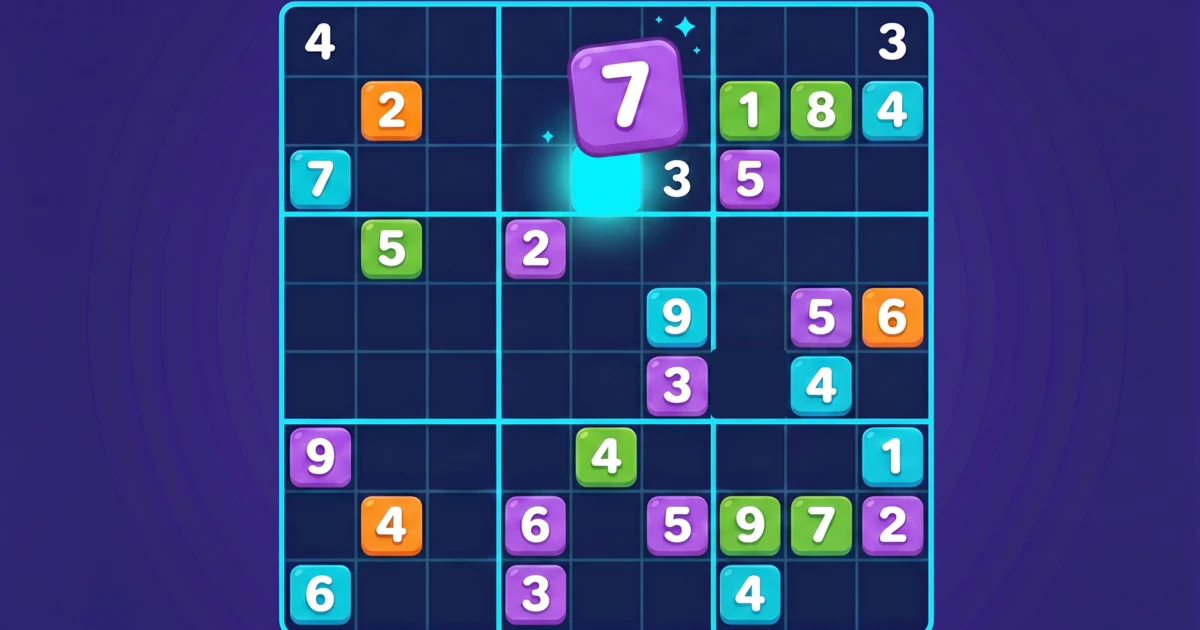
Killer Sudoku

Killer Sudoku

Puzzle Ngayong Araw

Killer Sudoku - Cage Sums Instead of Starting Numbers, Solo or With Friends

Mga Variant:Sudoku OnlineSudoku Online

3.0

Rating

0

0

Killer Sudoku - Cage Sums Instead of Starting Numbers, Solo or With Friends

export function MiniCell({value, sum, sumTone}) { // Mirrors how the real board draws a cell: an opaque white square with a dark digit, and the // cage total tucked into the top-left corner just inside the dashed cage outline, in the same // three colors the board uses (see client/src/games/sudoku/SudokuGrid.tsx). const toneClass = sumTone === 'correct' ? 'text-green-600' : sumTone === 'over' ? 'text-red-600' : 'text-gray-500'; return (

{sum === undefined ? null : ( <span className={'absolute left-1 top-0.5 text-[11px] font-bold leading-none ' + toneClass}>{sum} )} {value ?? ''}
); }

export function combinationsOf(size, total) { // Every set of size different digits from 1-9 that adds up to total. const results = []; const walk = (start, left, remaining, picked) => { if (left === 0) { if (remaining === 0) { results.push(picked); } return; } for (let digit = start; digit <= 9; digit++) { walk(digit + 1, left - 1, remaining - digit, [...picked, digit]); } }; walk(1, size, total, []); return results; }

export function CageDemo() { const TARGETS = [ {total: 7, blurb: 'A low total leaves you almost no choice, so a cage like this is where you start solving.'}, {total: 15, blurb: 'The most flexible total there is. On its own it tells you almost nothing, so you need the row, column, and box to narrow it down.'}, {total: 24, blurb: 'Only one set again, at the top end. High and low totals are always the easiest cages to crack.'}, ]; const [target, setTarget] = useState(7); const [cells, setCells] = useState([null, null, null]); const filled = cells.filter(cell => cell !== null); const total = filled.reduce((sum, cell) => sum + cell, 0); const isFull = filled.length === 3; const tone = total > target || (isFull && total !== target) ? 'over' : isFull ? 'correct' : undefined; const combos = combinationsOf(3, target);

const place = digit => { if (cells.includes(digit)) { setCells(cells.map(cell => (cell === digit ? null : cell))); return; } const next = cells.indexOf(null); if (next >= 0) { setCells(cells.map((cell, i) => (i === next ? digit : cell))); } };

const pickTarget = nextTarget => { setTarget(nextTarget); setCells([null, null, null]); };

return (

Fill a Cage

This is one cage of three cells. Tap digits to drop them in, and tap a digit again to take it back out. The number in the corner is the total the three cells have to reach, and it turns green when you get there.

{TARGETS.map(option => ( <button key={option.total} type="button" onClick={() => pickTarget(option.total)} className={ 'rounded-lg px-3 py-1 text-sm font-bold text-white transition-none ' + (target === option.total ? 'bg-purple-500' : 'bg-white/10 hover:bg-white/20') } > Total {option.total} ))}
{cells.map((cell, i) => ( ))}
{[1, 2, 3, 4, 5, 6, 7, 8, 9].map(digit => ( <button key={digit} type="button" onClick={() => place(digit)} className={ 'h-9 w-9 rounded-lg text-lg font-bold active:scale-95 ' + (cells.includes(digit) ? 'bg-purple-500 text-white' : 'bg-white/10 text-white/80 hover:bg-white/20') } > {digit} ))}

{isFull && total === target ? 'That works. Every digit is different and they add up to the total.' : total > target ? 'Too high. Take a digit back out and try a smaller one.' : TARGETS.find(option => option.total === target).blurb}

{combos.length === 1 ? 'Only one set of three digits works: ' : ${combos.length} sets of three digits work: } {combos.map(combo => combo.join('+')).join(', ')}

); }

export function FortyFiveDemo() { // A single 3x3 box. Three cages sit entirely inside it and the ninth cell belongs to a cage // that carries on into the next box, which is the shape you look for when you use the 45 rule. const CELLS = [ {value: 1, cage: 'a', sum: 3}, {value: 2, cage: 'a'}, {value: 3, cage: 'b', sum: 14}, {value: 4, cage: 'c', sum: 19}, {value: 5, cage: 'b'}, {value: 6, cage: 'b'}, {value: 7, cage: 'c'}, {value: 8, cage: 'c'}, {value: 9, cage: 'outside'}, ]; const [isRevealed, setIsRevealed] = useState(false); const TONES = {a: 'bg-amber-400', b: 'bg-blue-400', c: 'bg-emerald-400', outside: 'bg-white/40'}; return (

{CELLS.map((cell, i) => (
<span className={'absolute bottom-1 left-1/2 h-1.5 w-7 -translate-x-1/2 rounded-full ' + TONES[cell.cage]} />
))}

The 45 rule

Three cages sit entirely inside this box, totalling 3, 14, and 19. That accounts for eight of the nine cells. The ninth belongs to a cage that carries on into the next box, so its total is no help here. The box has to hold 1 to 9 once each, so it adds up to 45, and the missing cell is whatever is left.

45 - 3 - 14 - 19 = {isRevealed ? '9' : '?'}

<button type="button" onClick={() => setIsRevealed(!isRevealed)} className="w-max rounded-lg bg-white/10 px-3 py-1 text-sm font-bold text-white hover:bg-white/20 active:scale-95" > {isRevealed ? 'Hide the answer' : 'Show the answer'}
); }

Killer Sudoku

Killer sudoku is a free online sudoku variant where the grid gives you sums instead of starting numbers. The board is carved into cages, small groups of neighbouring cells drawn with a dotted outline, and each cage prints the total its digits must reach. No digit repeats inside a cage, and the rest is normal sudoku: every row, every column, and every 3x3 box holds 1 to 9 once each. You can play it on this page right now in your browser, alone or with friends on a shared board, at four difficulty levels, with no download and no signup.

Because the cages carry the information, killer grids start almost bare. An Easy puzzle here opens with four given digits and Expert usually opens with none at all, so your first move comes from arithmetic rather than from scanning for a number that is already on the board.

Killer Sudoku Rules

There are two rules on top of ordinary sudoku, and they are both about cages. A cage's digits have to add up to the small number in its top-left corner, and a digit can only appear once inside a cage. The second rule matters more than it looks, because it is what makes a total useful. A three-cell cage adding to 7 could be 1+2+4 or 1+3+3 if repeats were allowed, but they are not, so 1+2+4 is the only option and all three cells are settled before you have placed anything else.

Extreme totals are the way in. Low totals have to use the small digits and high totals have to use the large ones, so a two-cell cage adding to 3 is 1 and 2, a two-cell cage adding to 17 is 8 and 9, and a three-cell cage adding to 24 is 7, 8, and 9. Middling totals like 15 are the vaguest and are usually the last cages you fill.

The other technique worth learning early is the 45 rule. Every row, column, and 3x3 box contains each digit once, so each one adds up to 45. Find a row, column, or box where every cage sits fully inside it except for a cell or two, add up the cage totals, and the difference from 45 is what is left over.

One last detail: a cage can be a single cell. When it is, its total is simply the digit that goes there, which is the same thing as a given number in classic sudoku. Easy puzzles here include eight of those and Expert includes three, and that gap is a large part of why the difficulties feel so different.

Play Killer Sudoku Online Free

The board at the top of this page is already set to killer, so pressing play is the fastest way in. From anywhere else on Foony, open Sudoku, choose Create Room, and pick the Killer Sudoku card from the presets, or flip the Variant setting from Classic to Killer on any room you are setting up.

Four difficulty levels change both the cage shapes and how much of the grid you get for free:

Easy and Medium

Cages hold up to four cells, and plenty of them hold just one. Easy starts with four given digits and Medium with one, on top of the single-cell cages.

Hard and Expert

Cages stretch to five cells and single-cell cages get rare. Both normally open with no given digits at all, so the sums are all you have.

Every puzzle has exactly one solution, and it is checked before you ever see it. The generator builds cages from a finished grid and then solves the result under killer rules to confirm the answer is forced, so you never have to guess.

The rest of the room settings work the same as classic sudoku. Mistake tolerance is Casual (unlimited), Normal (three mistakes), or Perfectionist (one mistake and the puzzle ends). The host can put a clock on it, anywhere from 5 to 60 minutes, or leave it off. Killer solves are given more time for the same reward than classic ones, because they take longer, and they are scored on their own scale so a long solve is not penalised.

While you play, the board does the arithmetic with you. Each cage total sits in the corner of its first cell, turns green once the cage is full and correct, and turns red the moment your digits pass the total, so a slip shows up on the spot instead of forty cells later. Selecting a cell tints the rest of its cage, which is the fastest way to see the shape of a cage that wraps around a corner. Pencil marks work exactly as they do in classic sudoku.

Multiplayer Killer Sudoku

Killer is the sudoku variant that benefits most from a second pair of eyes, and every Foony room supports one. Turn Co-op on when you create the room and everyone joins a single team sharing one grid, with live cursors, so you can split the board by region, have someone work the cage arithmetic while another person scans rows, or just talk through a corner that will not open. It is also the easiest way to teach the variant to someone, since they can watch a cage get cracked instead of reading about it.

Leave Co-op off and everyone gets the same puzzle on their own grid, with first to finish legally taking the win. That covers a 1v1 race, a friends-only match, and a tournament room, which holds up to 1,000 players on one seed. Share the room link and people join from any modern browser on desktop, tablet, or phone. No account is needed to play, only to keep levels, ranks, and unlocks across devices.

Killer Sudoku Tips and Cage Combinations

Sweep for extreme cages first. Before you place anything, look for two-cell cages totalling 3, 4, 16, or 17, and three-cell cages totalling 6, 7, 23, or 24. Each of those has exactly one possible set of digits, and one settled cage usually gives you a second through the ordinary row and column rules.

Use the 45 rule on the edges of the grid, where boxes are most likely to have a single cell poking out of a cage. It also works across several rows or columns at once. Two full rows add up to 90, three add up to 135, so a cage that spills a single cell out of a three-row band gives that cell away.

Watch for cages inside one row, column, or box. Their digits cannot repeat anywhere in that unit either, so a two-cell cage totalling 16 inside a single box removes 7 and 9 from every other cell in that box, which is often more useful than knowing where they go.

Play Hard and Expert in Casual mode until the arithmetic is second nature. A wrong digit in killer usually comes from a miscount rather than a broken deduction, and there is little to learn from a puzzle that ends on one. Switch to Perfectionist once you stop miscounting, and chase Flawless Victory then.

Sudoku Leaderboards, Achievements, and Boards

Killer solves count towards everything classic solves do. Wins feed the sudoku leaderboards, which filter by day, week, month, year, or all-time.

There are eight sudoku achievements and killer is a fair route to most of them. Flawless Victory asks for zero mistakes on any puzzle, Zen Master for a solve with no hints, and Hard as Nails and Puzzle Master for Hard and Expert solves with three mistakes or fewer, all of which count on a killer board. Quick Solve is the one to leave for classic, since it wants an Easy puzzle finished inside five minutes.

Playing also drops sudoku boards and number styles. There are 12 boards, including Wooden, Zen Garden, Blueprint, and Neon, and 12 number styles such as Ink Brush, Fountain Pen, and Gilded, with the Calligraphy style handed out at level 50. They change how the grid looks and nothing else. The dotted cage outlines and their totals draw over whichever board you have equipped.

Classic Sudoku and Other Puzzles

If the cage arithmetic is new to you, the sudoku page covers the base rules the variant is built on, along with the same co-op rooms, races, and difficulty levels. Working through a Hard classic puzzle first makes killer much easier to pick up, because once the cages have given you a dozen digits the rest of the solve is ordinary sudoku.

Sudoku Online: Mga Madalas Itanong

Puwede ba akong maglaro ng co-op sudoku sa parehong board kasama ang isang kaibigan?
Oo. I-enable ang Co-op (o "coop", pareho lang) kapag gumawa ka ng room sa Foony Sudoku, at lahat ng nasa lobby ay sasali sa isang team na nag-share ng iisang 9x9 board na may live cursors sa real time. Puwede ninyong hatiin ang mga seksyon sa mga kasama, i-double-check ang placements ng bawat isa bago mag-lock in, o mag-chat lang habang inaalam ang mas mahihirap na deductions sa Hard at Expert na puzzles. Ito ang pinakamadaling paraan para turuan ang isang baguhan nang hindi sumisilip sa balikat niya.
Anong sudoku difficulty levels ang inaalok ng Foony?
May apat na antas ng hirap ang Foony Sudoku, na pinipili nang isang beses kada room. Sa Easy, dalawang teknik lang na alam ng lahat sa simula ang kailangan: ang nag-iisang numerong puwede pa sa isang square, at ang nag-iisang square na puwede pang lagyan ng isang numero. Sa Medium, may mga pair, kung saan pareho ang dalawang posibleng numero ng dalawang square kaya hindi na puwedeng ilagay roon ang iba, at ang X-wing, kung saan nakapirmi ang isang numero sa parehong dalawang column sa dalawang row. Sa Hard, may mga triple at mas malalaking bersyon ng pattern na iyon, at dito talagang nagiging kapaki-pakinabang ang pagsusulat ng pencil marks. Sa Expert, may mga chain, kung saan sinusundan mo ang isang numero sa ilang square para maalis ito bilang posibilidad sa isang malayong square. Mas kaunti ang panimulang numero sa mas matataas na antas ng hirap, at mas marami rin ang gantimpalang XP at item drops kapag natapos mo ang mga ito.
Libre bang laruin ang Foony Sudoku?
Oo. Ang Foony Sudoku ay ganap na libre sa browser. Walang paywall sa mga puzzles, sa multiplayer rooms, sa tournaments, o sa achievements. Ang shop ay nagbebenta ng optional na cosmetic boards at number styles; wala doon ang nagbabago ng puzzle generator o ng mga rules.
Ano ang pagkakaiba ng Casual, Normal, at Perfectionist mode?
Ang tatlong mode sa Foony Sudoku ay nagbabago kung gaano kahigpit ang mistake tolerance. Pinapayagan ng Casual ang unlimited mistakes; hindi natatapos ang puzzle sa pagkabigo, na perpekto para sa pag-aaral. Pinapayagan ng Normal ang hanggang tatlong mistakes bago matapos ang game. Tinatapos ng Perfectionist ang game sa isang maling placement lamang, na siyang tamang setting kung hinahabol mo ang Flawless Victory achievement o itinutulak mo ang skill ceiling mo. Mas malaki ang bayad ng higher-stakes modes sa XP at sa item drops.
Paano maglaro ng sudoku?
Ang sudoku ay isang logic puzzle sa 9x9 grid na hinati sa siyam na 3x3 boxes. Ang grid ay nagsisimulang bahagyang puno ng mga numero mula 1 hanggang 9. Ang layunin mo ay punan ang bawat empty cell para ang bawat row, bawat column, at bawat 3x3 box ay may bawat digit 1 hanggang 9 nang eksaktong isang beses lamang. Walang arithmetic na kasangkot, logical deduction lang. Hina-highlight ng Foony Sudoku ang legal placements, ipinapakita ang conflicts sa pula, at may pencil marks para sa pag-track ng candidate numbers sa mga cells na hindi mo pa na-commit.
Puwede ba akong maglaro ng sudoku nang hindi nag-sign up?
Oo. Buksan ang Foony Sudoku at nasa board ka na, walang account na kailangan. Mag-sign up lang kung gusto mo ng cross-device level sync, persistent leaderboard ranks, at shop unlocks. Ang buong ruleset, lahat ng apat na difficulty levels, lahat ng tatlong game modes, at ang multiplayer rooms ay available nang walang account.
Paano ako makakapaglaro ng sudoku online kasama ang mga kaibigan?
Buksan ang Foony Sudoku, i-click ang "Play with Friends" para gumawa ng private room, tapos i-share ang invite link. Sasali ang mga kaibigan mo mula sa anumang modernong browser sa desktop, tablet, o phone, walang account na kailangang gawin at walang ii-install. Piliin ang difficulty, piliin ang mode (Casual / Normal / Perfectionist), piliin kung co-op o race ang room, at nasa board ka na agad.
May leaderboards, achievements, at cosmetic items ba ang Foony Sudoku?
Oo, lahat ng tatlo. Ang mga panalo sa Foony Sudoku ay napupunta sa pampublikong Leaderboards, na puwedeng i-filter ayon sa araw, linggo, buwan, taon, o all-time. May 12 Achievements sa laro, kasama ang Flawless Victory (walang mali sa kahit anong puzzle), Quick Solve (isang Easy na puzzle sa loob ng wala pang 5 minuto), Hard as Nails at Puzzle Master (Hard / Expert na may tatlo o mas kaunting mali), Zen Master (puzzle na nalutas nang walang hint), at apat para sa mga pang-araw-araw na puzzle, hanggang Hardest of the Day para sa 100 pang-araw-araw na Expert puzzle. May 13 cosmetic board (Wooden, Zen Garden, Blueprint, Stained Glass, Koi Pond, Ancient Scroll, at marami pa) at 13 estilo ng numero (Ink Pen, Fountain Pen, Ink Brush, Gilded, Calligraphy, Gemstone, at marami pa), na makukuha sa Tindahan, sa mga drop, o sa mga pang-araw-araw na puzzle. Puro visual lang ang skins at hindi kailanman naaapektuhan ang puzzle generator.
Puwede ba akong makipagrace sa mga kaibigan, maglaro ng 2 player sudoku, o magpatakbo ng sudoku tournament?
Oo, kumpleto lahat sa iisang mode. Iwanan ang Co-op na naka-off kapag gumawa ka ng room sa Foony Sudoku at bawat manlalaro sa lobby ay makakakuha ng parehong starting puzzle sa sariling grid; ang unang solver na makapag-fill ng board nang legal ang panalo. Sakop nito ang 1v1 / 2 player sudoku, friends-only race, at competitive sudoku tournament na may hanggang 1,000 entrants sa iisang seed. Ipares ito sa Perfectionist na mistake tolerance para sa brutal na sprint kung saan tatanggalin ka sa isang maling placement, o Casual para sa relaxed na "sino mauunang matapos" round.
Puwede ba akong maglagay ng time limit sa isang sudoku puzzle?
Oo. Puwedeng mag-set ang host sa Foony Sudoku ng time limit mula sa mahigpit na 5 minuto hanggang sa 60 minuto kada puzzle, o tuluyang i-disable ang clock para sa relaxed na untimed session. Independent ang time limits sa difficulty at mistake-tolerance settings, kaya puwede kang magpatakbo ng Expert puzzle sa Casual mistake tolerance na may 60-minutong clock, o Easy puzzle sa Perfectionist mode na may 10-minutong sprint.
Puwede ko bang laruin ang Foony Sudoku nang unblocked sa school o trabaho?
Ang Foony Sudoku ay tumatakbo nang buo sa browser, kaya gumagana ito sa karamihan ng school at office networks na nagba-block ng standalone game installs. Walang executable na patatakbuhin at walang app store account, at ang page mismo ay nag-load mula sa foony.com sa pamamagitan ng HTTPS. Kung dini-block ng network mo nang direkta ang foony.com, hilingin sa kung sino ang nagpapatakbo ng IT na payagan ito; wala kami sa mga karaniwang "blocked games" lists.
Garantisado bang may natatanging solusyon ang mga Foony sudoku puzzles?
Oo. Bawat puzzle na ginagawa sa Foony Sudoku ay may eksaktong isang solusyon na maaabot gamit lang ang lohika—walang hulaan. Kung napipilitan kang manghula, may constraint kang hindi napansin o kailangan mo ng mas advanced na teknik (umaasa ang Hard sa mga pattern na sabay na nakakalat sa dalawa o tatlong row, habang ang Expert naman ay sa mga chain na sinusundan mo mula square hanggang square). Ang puzzle na may maraming solusyon ay itinuturing na invalid na Sudoku, at hindi kailanman gumagawa ng ganoon ang generator namin. Muling sinusuri ng Sudoku Explainer, ang batayang grader, ang bawat puzzle bago ito ilabas, at itinatapon ito kapag hindi tugma ang pagsusuri nito sa ibinigay naming antas.
8 Ball Pool online multiplayer billiards icon