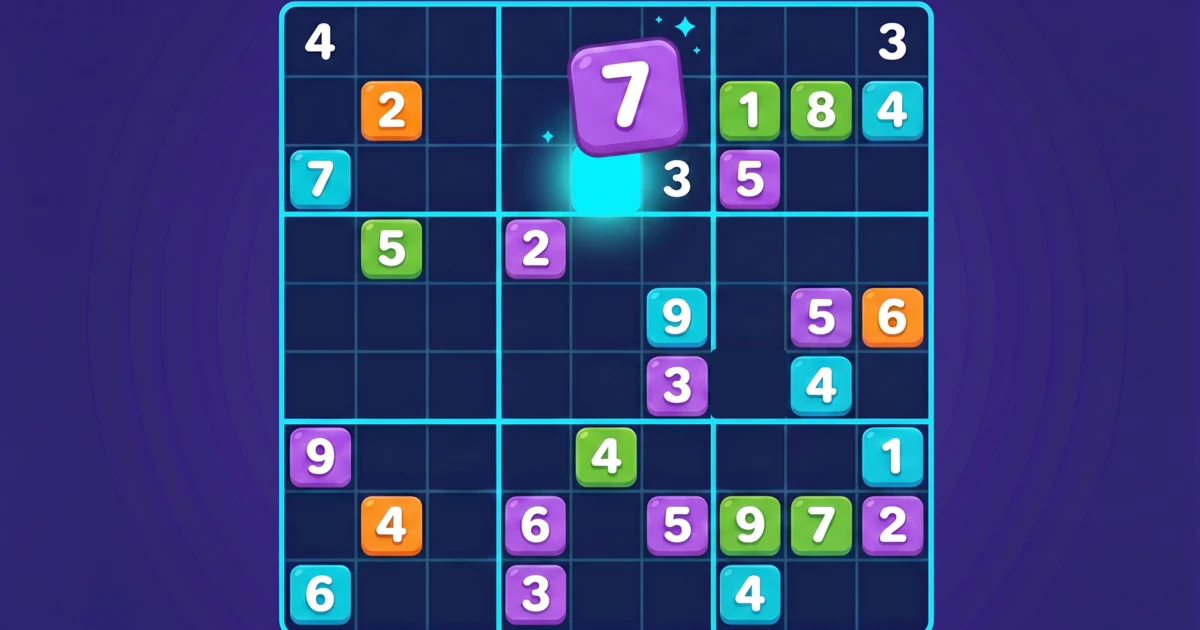
Killer Sudoku

Killer Sudoku

Щоденна головоломка

Killer Sudoku - Cage Sums Instead of Starting Numbers, Solo or With Friends

Варіанти:Судоку онлайнСудоку онлайн

3.0

Рейтинг

0

0

Killer Sudoku - Cage Sums Instead of Starting Numbers, Solo or With Friends

export function MiniCell({value, sum, sumTone}) { // Mirrors how the real board draws a cell: an opaque white square with a dark digit, and the // cage total tucked into the top-left corner just inside the dashed cage outline, in the same // three colors the board uses (see client/src/games/sudoku/SudokuGrid.tsx). const toneClass = sumTone === 'correct' ? 'text-green-600' : sumTone === 'over' ? 'text-red-600' : 'text-gray-500'; return (

{sum === undefined ? null : ( <span className={'absolute left-1 top-0.5 text-[11px] font-bold leading-none ' + toneClass}>{sum} )} {value ?? ''}
); }

export function combinationsOf(size, total) { // Every set of size different digits from 1-9 that adds up to total. const results = []; const walk = (start, left, remaining, picked) => { if (left === 0) { if (remaining === 0) { results.push(picked); } return; } for (let digit = start; digit <= 9; digit++) { walk(digit + 1, left - 1, remaining - digit, [...picked, digit]); } }; walk(1, size, total, []); return results; }

export function CageDemo() { const TARGETS = [ {total: 7, blurb: 'A low total leaves you almost no choice, so a cage like this is where you start solving.'}, {total: 15, blurb: 'The most flexible total there is. On its own it tells you almost nothing, so you need the row, column, and box to narrow it down.'}, {total: 24, blurb: 'Only one set again, at the top end. High and low totals are always the easiest cages to crack.'}, ]; const [target, setTarget] = useState(7); const [cells, setCells] = useState([null, null, null]); const filled = cells.filter(cell => cell !== null); const total = filled.reduce((sum, cell) => sum + cell, 0); const isFull = filled.length === 3; const tone = total > target || (isFull && total !== target) ? 'over' : isFull ? 'correct' : undefined; const combos = combinationsOf(3, target);

const place = digit => { if (cells.includes(digit)) { setCells(cells.map(cell => (cell === digit ? null : cell))); return; } const next = cells.indexOf(null); if (next >= 0) { setCells(cells.map((cell, i) => (i === next ? digit : cell))); } };

const pickTarget = nextTarget => { setTarget(nextTarget); setCells([null, null, null]); };

return (

Fill a Cage

This is one cage of three cells. Tap digits to drop them in, and tap a digit again to take it back out. The number in the corner is the total the three cells have to reach, and it turns green when you get there.

{TARGETS.map(option => ( <button key={option.total} type="button" onClick={() => pickTarget(option.total)} className={ 'rounded-lg px-3 py-1 text-sm font-bold text-white transition-none ' + (target === option.total ? 'bg-purple-500' : 'bg-white/10 hover:bg-white/20') } > Total {option.total} ))}
{cells.map((cell, i) => ( ))}
{[1, 2, 3, 4, 5, 6, 7, 8, 9].map(digit => ( <button key={digit} type="button" onClick={() => place(digit)} className={ 'h-9 w-9 rounded-lg text-lg font-bold active:scale-95 ' + (cells.includes(digit) ? 'bg-purple-500 text-white' : 'bg-white/10 text-white/80 hover:bg-white/20') } > {digit} ))}

{isFull && total === target ? 'That works. Every digit is different and they add up to the total.' : total > target ? 'Too high. Take a digit back out and try a smaller one.' : TARGETS.find(option => option.total === target).blurb}

{combos.length === 1 ? 'Only one set of three digits works: ' : ${combos.length} sets of three digits work: } {combos.map(combo => combo.join('+')).join(', ')}

); }

export function FortyFiveDemo() { // A single 3x3 box. Three cages sit entirely inside it and the ninth cell belongs to a cage // that carries on into the next box, which is the shape you look for when you use the 45 rule. const CELLS = [ {value: 1, cage: 'a', sum: 3}, {value: 2, cage: 'a'}, {value: 3, cage: 'b', sum: 14}, {value: 4, cage: 'c', sum: 19}, {value: 5, cage: 'b'}, {value: 6, cage: 'b'}, {value: 7, cage: 'c'}, {value: 8, cage: 'c'}, {value: 9, cage: 'outside'}, ]; const [isRevealed, setIsRevealed] = useState(false); const TONES = {a: 'bg-amber-400', b: 'bg-blue-400', c: 'bg-emerald-400', outside: 'bg-white/40'}; return (

{CELLS.map((cell, i) => (
<span className={'absolute bottom-1 left-1/2 h-1.5 w-7 -translate-x-1/2 rounded-full ' + TONES[cell.cage]} />
))}

The 45 rule

Three cages sit entirely inside this box, totalling 3, 14, and 19. That accounts for eight of the nine cells. The ninth belongs to a cage that carries on into the next box, so its total is no help here. The box has to hold 1 to 9 once each, so it adds up to 45, and the missing cell is whatever is left.

45 - 3 - 14 - 19 = {isRevealed ? '9' : '?'}

<button type="button" onClick={() => setIsRevealed(!isRevealed)} className="w-max rounded-lg bg-white/10 px-3 py-1 text-sm font-bold text-white hover:bg-white/20 active:scale-95" > {isRevealed ? 'Hide the answer' : 'Show the answer'}
); }

Killer Sudoku

Killer sudoku is a free online sudoku variant where the grid gives you sums instead of starting numbers. The board is carved into cages, small groups of neighbouring cells drawn with a dotted outline, and each cage prints the total its digits must reach. No digit repeats inside a cage, and the rest is normal sudoku: every row, every column, and every 3x3 box holds 1 to 9 once each. You can play it on this page right now in your browser, alone or with friends on a shared board, at four difficulty levels, with no download and no signup.

Because the cages carry the information, killer grids start almost bare. An Easy puzzle here opens with four given digits and Expert usually opens with none at all, so your first move comes from arithmetic rather than from scanning for a number that is already on the board.

Killer Sudoku Rules

There are two rules on top of ordinary sudoku, and they are both about cages. A cage's digits have to add up to the small number in its top-left corner, and a digit can only appear once inside a cage. The second rule matters more than it looks, because it is what makes a total useful. A three-cell cage adding to 7 could be 1+2+4 or 1+3+3 if repeats were allowed, but they are not, so 1+2+4 is the only option and all three cells are settled before you have placed anything else.

Extreme totals are the way in. Low totals have to use the small digits and high totals have to use the large ones, so a two-cell cage adding to 3 is 1 and 2, a two-cell cage adding to 17 is 8 and 9, and a three-cell cage adding to 24 is 7, 8, and 9. Middling totals like 15 are the vaguest and are usually the last cages you fill.

The other technique worth learning early is the 45 rule. Every row, column, and 3x3 box contains each digit once, so each one adds up to 45. Find a row, column, or box where every cage sits fully inside it except for a cell or two, add up the cage totals, and the difference from 45 is what is left over.

One last detail: a cage can be a single cell. When it is, its total is simply the digit that goes there, which is the same thing as a given number in classic sudoku. Easy puzzles here include eight of those and Expert includes three, and that gap is a large part of why the difficulties feel so different.

Play Killer Sudoku Online Free

The board at the top of this page is already set to killer, so pressing play is the fastest way in. From anywhere else on Foony, open Sudoku, choose Create Room, and pick the Killer Sudoku card from the presets, or flip the Variant setting from Classic to Killer on any room you are setting up.

Four difficulty levels change both the cage shapes and how much of the grid you get for free:

Easy and Medium

Cages hold up to four cells, and plenty of them hold just one. Easy starts with four given digits and Medium with one, on top of the single-cell cages.

Hard and Expert

Cages stretch to five cells and single-cell cages get rare. Both normally open with no given digits at all, so the sums are all you have.

Every puzzle has exactly one solution, and it is checked before you ever see it. The generator builds cages from a finished grid and then solves the result under killer rules to confirm the answer is forced, so you never have to guess.

The rest of the room settings work the same as classic sudoku. Mistake tolerance is Casual (unlimited), Normal (three mistakes), or Perfectionist (one mistake and the puzzle ends). The host can put a clock on it, anywhere from 5 to 60 minutes, or leave it off. Killer solves are given more time for the same reward than classic ones, because they take longer, and they are scored on their own scale so a long solve is not penalised.

While you play, the board does the arithmetic with you. Each cage total sits in the corner of its first cell, turns green once the cage is full and correct, and turns red the moment your digits pass the total, so a slip shows up on the spot instead of forty cells later. Selecting a cell tints the rest of its cage, which is the fastest way to see the shape of a cage that wraps around a corner. Pencil marks work exactly as they do in classic sudoku.

Multiplayer Killer Sudoku

Killer is the sudoku variant that benefits most from a second pair of eyes, and every Foony room supports one. Turn Co-op on when you create the room and everyone joins a single team sharing one grid, with live cursors, so you can split the board by region, have someone work the cage arithmetic while another person scans rows, or just talk through a corner that will not open. It is also the easiest way to teach the variant to someone, since they can watch a cage get cracked instead of reading about it.

Leave Co-op off and everyone gets the same puzzle on their own grid, with first to finish legally taking the win. That covers a 1v1 race, a friends-only match, and a tournament room, which holds up to 1,000 players on one seed. Share the room link and people join from any modern browser on desktop, tablet, or phone. No account is needed to play, only to keep levels, ranks, and unlocks across devices.

Killer Sudoku Tips and Cage Combinations

Sweep for extreme cages first. Before you place anything, look for two-cell cages totalling 3, 4, 16, or 17, and three-cell cages totalling 6, 7, 23, or 24. Each of those has exactly one possible set of digits, and one settled cage usually gives you a second through the ordinary row and column rules.

Use the 45 rule on the edges of the grid, where boxes are most likely to have a single cell poking out of a cage. It also works across several rows or columns at once. Two full rows add up to 90, three add up to 135, so a cage that spills a single cell out of a three-row band gives that cell away.

Watch for cages inside one row, column, or box. Their digits cannot repeat anywhere in that unit either, so a two-cell cage totalling 16 inside a single box removes 7 and 9 from every other cell in that box, which is often more useful than knowing where they go.

Play Hard and Expert in Casual mode until the arithmetic is second nature. A wrong digit in killer usually comes from a miscount rather than a broken deduction, and there is little to learn from a puzzle that ends on one. Switch to Perfectionist once you stop miscounting, and chase Flawless Victory then.

Sudoku Leaderboards, Achievements, and Boards

Killer solves count towards everything classic solves do. Wins feed the sudoku leaderboards, which filter by day, week, month, year, or all-time.

There are eight sudoku achievements and killer is a fair route to most of them. Flawless Victory asks for zero mistakes on any puzzle, Zen Master for a solve with no hints, and Hard as Nails and Puzzle Master for Hard and Expert solves with three mistakes or fewer, all of which count on a killer board. Quick Solve is the one to leave for classic, since it wants an Easy puzzle finished inside five minutes.

Playing also drops sudoku boards and number styles. There are 12 boards, including Wooden, Zen Garden, Blueprint, and Neon, and 12 number styles such as Ink Brush, Fountain Pen, and Gilded, with the Calligraphy style handed out at level 50. They change how the grid looks and nothing else. The dotted cage outlines and their totals draw over whichever board you have equipped.

Classic Sudoku and Other Puzzles

If the cage arithmetic is new to you, the sudoku page covers the base rules the variant is built on, along with the same co-op rooms, races, and difficulty levels. Working through a Hard classic puzzle first makes killer much easier to pick up, because once the cages have given you a dozen digits the rest of the solve is ordinary sudoku.

Судоку онлайн: часті запитання

Чи можна грати в кооперативне судоку на одній дошці з другом?
Так. Увімкни «Кооп» (або «coop», це одне й те саме) під час створення кімнати на Судоку від Foony, і всі в лобі об’єднуються в одну команду, яка грає на спільній дошці 9x9 з живими курсорами в реальному часі. Можна розділити секції між товаришами, перевіряти розстановки одне в одного перед фіксацією або просто обговорювати складніші логічні ходи на «Складному» та «Експертному» рівнях. Це найпростіший спосіб навчити новачка, не зазираючи йому через плече.
Які рівні складності судоку пропонує Foony?
У Судоку від Foony є чотири рівні складності, і для всієї кімнати рівень обирають один раз. Для «Легкого» потрібні лише два прийоми, з яких починають усі: знайти єдине число, яке ще можна вписати в клітинку, і єдину клітинку, куди ще можна вписати певне число. На «Середньому» додаються пари, коли дві клітинки мають ті самі два можливі числа й не допускають жодних інших, а також X-Wing, коли в двох рядках число прив'язане до тих самих двох стовпців. На «Складному» додаються трійки та більші версії таких схем — саме тут олівцеві позначки починають справді допомагати. На рівні «Експерт» додаються ланцюжки, де ти простежуєш одне число через кілька клітинок, щоб виключити його десь далеко. На вищих рівнях на старті заповнено менше чисел, а за завершення ти отримуєш більше XP і предметів у нагороду.
Чи безкоштовне судоку від Foony?
Так. Судоку від Foony повністю безкоштовне у браузері. Жодного платного бар’єру для пазлів, мультиплеєрних кімнат, турнірів чи досягнень. У магазині продаються лише косметичні дошки й стилі цифр; ніщо з цього не впливає на генератор пазлів чи правила.
У чому різниця між режимами «Спокійний», «Звичайний» і «Перфекціоніст»?
Три режими на Судоку від Foony змінюють толерантність до помилок. «Спокійний» дозволяє необмежену кількість помилок; пазл ніколи не закінчується невдачею — ідеально для навчання. «Звичайний» дозволяє до трьох помилок, після чого гра завершується. «Перфекціоніст» завершує гру на першій же неправильній цифрі — саме той режим, якщо ти ганяєшся за досягненням «Бездоганна перемога» або хочеш досягти своєї стелі майстерності. Складніші режими дають більше XP і більше випадінь предметів.
Як грати в судоку?
Судоку — це логічний пазл на сітці 9x9, поділеній на дев’ять блоків 3x3. Сітка частково заповнена цифрами від 1 до 9. Твоя мета — заповнити всі порожні клітинки так, щоб у кожному рядку, кожному стовпці й кожному блоці 3x3 кожна цифра від 1 до 9 траплялася рівно один раз. Ніякої арифметики — лише логічна дедукція. Судоку від Foony підсвічує правильні ходи, виділяє конфлікти червоним і має «олівцеві» позначки для відстеження можливих цифр у клітинках, які ти ще не зафіксував.
Чи можна грати в судоку без реєстрації?
Так. Відкрий Судоку від Foony — і ти вже за дошкою, акаунт не потрібен. Реєструйся, лише якщо хочеш синхронізації рівнів між пристроями, постійних місць у таблицях лідерів та розблокувань у магазині. Повний набір правил, усі чотири рівні складності, усі три режими гри й мультиплеєрні кімнати доступні без акаунта.
Як грати в судоку онлайн з друзями?
Відкрий Судоку від Foony, натисни «Грати з друзями», щоб створити приватну кімнату, а потім поділися посиланням-запрошенням. Друзі приєднаються з будь-якого сучасного браузера на комп’ютері, планшеті чи телефоні — без створення акаунтів і без жодних встановлень. Обери складність, режим (Спокійний / Звичайний / Перфекціоніст), вирішуй, чи буде кімната кооперативом, чи гонкою — і ти вже за дошкою.
Чи має судоку від Foony таблиці лідерів, досягнення та косметичні предмети?
Так, усі три. Перемоги в Судоку від Foony потрапляють до публічних таблиць лідерів, які можна фільтрувати за днем, тижнем, місяцем, роком або за весь час. У грі є 12 досягнень, зокрема «Бездоганна перемога» (жодної помилки в головоломці будь-якого рівня), «Швидке розв'язання» (головоломка легкого рівня менш ніж за 5 хвилин), «Міцний горішок» і «Майстер головоломок» (складна або експертна головоломка з не більш ніж трьома помилками), «Майстер дзен» (головоломка, розв'язана без підказок), а також чотири досягнення за щоденні головоломки — аж до «Найскладнішої за день» за 100 щоденних головоломок експертного рівня. Є 13 оформлень дошки («Дерев'яна дошка», «Сад дзен», «Креслення», «Вітраж», «Ставок із коі», «Стародавній сувій» тощо) і 13 стилів цифр («Чорнильна ручка», «Пір'яна ручка», «Пензель із тушшю», «Позолота», «Каліграфія», «Самоцвіти» тощо). Їх можна придбати в Магазині, отримати серед випадкових нагород або за щоденні головоломки. Оформлення змінюють лише вигляд і ніколи не впливають на генератор головоломок.
Чи можна змагатися з друзями, грати в судоку на 2 гравців або провести турнір з судоку?
Так, усе три в одному режимі. Не вмикай «Кооп» при створенні кімнати на Судоку від Foony, і кожен гравець у лобі отримає той самий стартовий пазл на власній сітці; перемагає той, хто перший легально заповнить дошку. Це підходить і для дуелі 1на1 / судоку на 2 гравців, і для гонки тільки з друзями, і для змагального турніру з судоку до 1000 учасників на одному «насінні». Поєднай це з режимом «Перфекціоніст», де одна неправильна цифра вибиває з гри, — отримаєш жорсткий спринт; або обери «Спокійний» для розслабленого раунду «хто перший фінішує».
Чи можна встановити обмеження часу на пазл судоку?
Так. Господар кімнати на Судоку від Foony може встановити ліміт часу від щільних 5 до 60 хвилин на пазл або взагалі вимкнути таймер для розслабленої сесії без часу. Обмеження часу не залежать від складності та толерантності до помилок, тож можна запустити «Експертний» пазл у режимі «Спокійний» з таймером на 60 хвилин — або «Легкий» пазл у режимі «Перфекціоніст» зі спринтом на 10 хвилин.
Чи можна грати в судоку від Foony без блокування у школі чи на роботі?
Судоку від Foony працює повністю у браузері, тож він заходить на більшості шкільних та офісних мереж, які блокують встановлення окремих ігор. Тут немає виконуваного файлу і не потрібен акаунт у магазині застосунків, а сама сторінка завантажується з foony.com через HTTPS. Якщо твоя мережа блокує foony.com напряму — попроси айтішника додати його у виключення; нас немає у стандартних списках «заблокованих ігор».
Чи гарантовано пазли судоку від Foony мають єдиний розв’язок?
Так. Кожна головоломка, створена в Судоку від Foony, має рівно один розв'язок, до якого можна дійти самою логікою — вгадувати не потрібно. Якщо доводиться вгадувати, це означає, що десь пропущено обмеження або потрібен складніший прийом («Складний» спирається на схеми, розкидані одразу по двох чи трьох рядках, а «Експерт» — на ланцюжки, які треба простежувати від клітинки до клітинки). Головоломка з кількома розв'язками за визначенням є некоректним Судоку, і наш генератор таких ніколи не створює. Кожну опубліковану головоломку повторно перевіряє Sudoku Explainer, еталонний оцінювач складності, і якщо його оцінка не збігається з нашою, головоломку відбраковують.
8 Ball Pool online multiplayer billiards icon